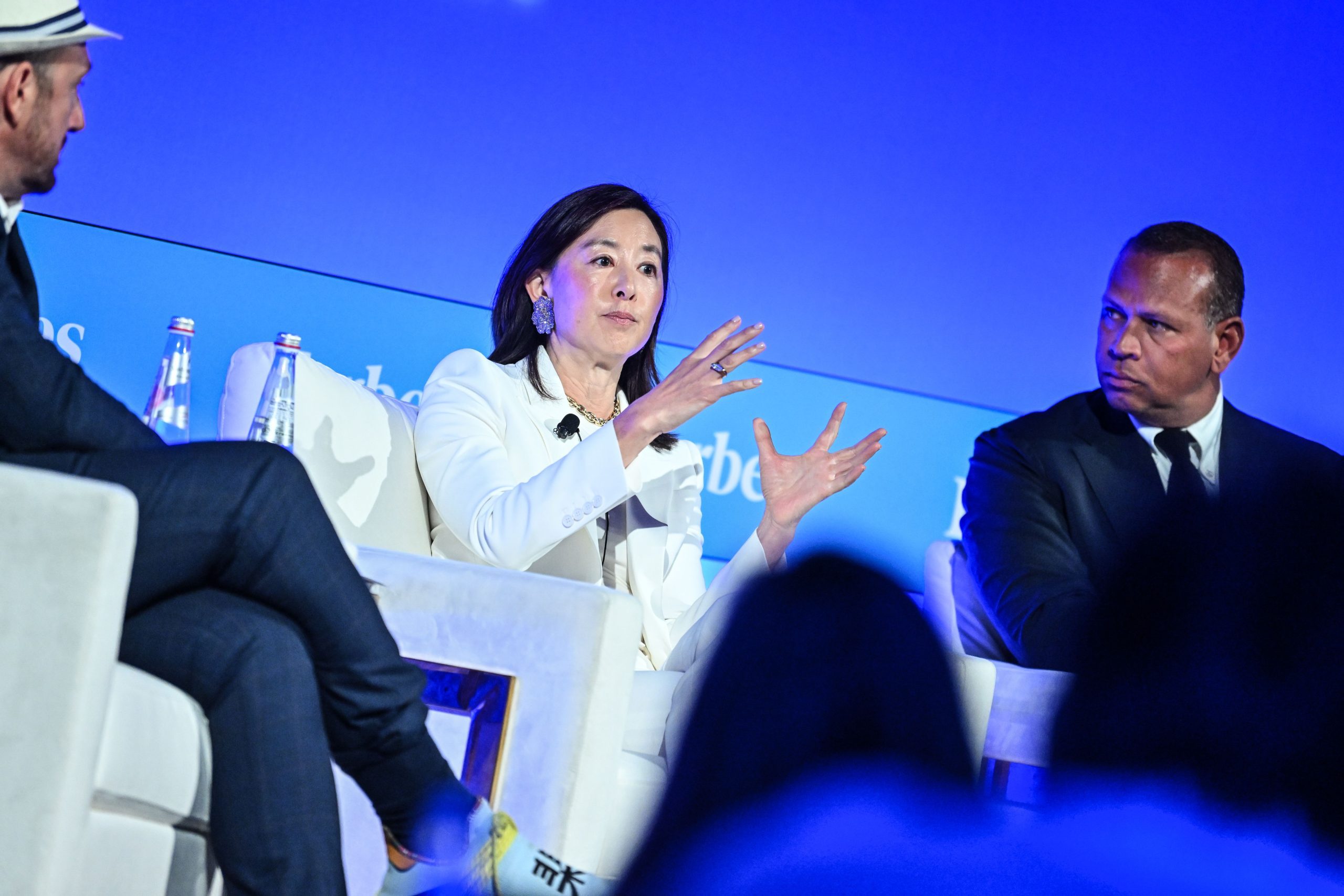
Johan Bruyneel, Lance Armstrong’s former sports director on the US Postal and Discovery Channel teams, appeared on Wednesday in a place where, according to the rules, he should not have been: the Tour de France start village in Auch.
The scene took place on July 17 and did not go unnoticed. Bruyneel was participating in the program ‘Vive le vélo’ on the Belgian public broadcaster VRT1, and he himself shared his presence on social media. The International Cycling Union (UCI) was quick to react with a statement reminding everyone that the Belgian has been suspended for life since 2018 for serious violations of anti-doping rules.
Can the Tour afford this kind of image?
The UCI’s statement was categorical: “On October 25, 2018, Mr. Bruyneel was sanctioned by the Court of Arbitration for Sport (CAS) with a lifetime ban for an anti-doping rule violation while working for US Postal and the Discovery Channel team.” Under the World Anti-Doping Code and the organization’s own rules, he is prohibited from “any activity related to cycling.”
The nuance lies in the term “activity.” Attending an event such as the Tour as a spectator is not restricted. What is prohibited is accessing accredited areas or actively participating in the event. And according to the UCI, that is precisely what happened in Auch: Bruyneel was in a space reserved for guests and teams, an area off-limits to the general public.
A name that continues to cause discomfort in cycling
The Tour de France has not made any public comments about the incident. Whether Bruyneel’s access to the start village was authorized by the organization or facilitated by third parties remains unanswered. Is it possible that someone with a lifetime suspension could gain access without being checked? Or does his past relevance still carry more weight than many would be willing to admit?
With his track record, Johan Bruyneel represents one of the darkest chapters in modern cycling. The fact that he was seen in a symbolic space such as the start area of a stage once again calls into question the boundaries between what is permitted and what is tolerated. To what extent can cycling today continue to coexist with figures who marked such a controversial past?
Official silence, noise in the air
So far, neither the Tour nor VRT1 have responded to the UCI’s statements. Bruyneel’s appearance, although probably for media purposes, has generated obvious discomfort. Should the Tour take a firmer stance on which figures can or cannot be part of the race ecosystem, even visually?
The facts are clear: Bruyneel remains suspended for life, and his presence in a restricted area does not comply with that sanction. However, his visit to Auch highlights something deeper: the way cycling manages its relationship with the symbols of an era that still hurts.
 Last related articles