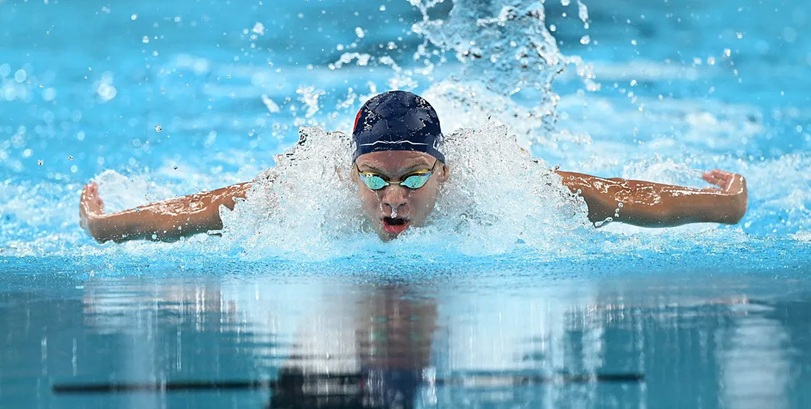
Rising water temperatures, extreme weather events, scarcity and pollution are already affecting facilities, training sessions and competitions in aquatic sports. World Aquatics warns that these risks also impact the safety of athletes and communities, and has decided to respond with a strategic sustainability plan to address the climate crisis.
The international federation unveiled this week its Sustainability Blueprint, a roadmap with 57 concrete objectives aimed at integrating sustainability across all areas of its activity. The strategy seeks to ensure that aquatic sports can continue to thrive in harmony with nature for future generations.
World Aquatics launches a plan with 57 objectives
The document is built around the United Nations Sustainable Development Goals (SDGs) and rests on three key pillars: Organisation, Events and Community. Each section sets out time-bound targets designed to reduce the environmental footprint, strengthen social responsibility and consolidate governance in the sport.
The president of World Aquatics, Husain Al Musallam, stressed that as an international federation, the organisation not only enjoys the privilege of a global platform but also carries the responsibility to lead by example in sustainability. “We are united in our commitment to harness the power of aquatic sports and our worldwide reach to help build a better future,” he said.
The impact of climate change on aquatic sports
The federation warns that the climate crisis presents growing risks for sport: from rising water temperatures and levels to extreme weather events that threaten venues and facilities. Al Musallam underlined the need to better protect water resources and ecosystems: “Today we must work together to understand and protect water, reduce any negative impact on people, nature and the climate, and ensure that aquatic ecosystems and all who depend on them can thrive.”
He also pointed out that these changes not only endanger competitions but also increase the risk of drowning, directly affecting the safety of athletes and communities.
Previous actions and international commitment
Although the strategy is now presented in a structured way, World Aquatics had already undertaken several sustainability-related initiatives. These include measuring its carbon footprint with the support of the International Olympic Committee (IOC) and Deloitte, as well as joining the United Nations Sports for Climate Action Framework, which encourages the sports sector to contribute to global climate goals.
The federation has also advanced social programmes. On World Drowning Prevention Day, held during the Paris 2024 Olympic Games, it launched the Discover Water project, aimed at teaching children essential water safety skills to promote safer access to aquatic sports.
During the presentation, Al Musallam emphasised that the Sustainability Blueprint is not a plan with an end point but a long-term commitment. He explained that the goal is to provide safe and healthy environments for today’s athletes and for future generations. “With this Blueprint we take that commitment further, assessing our unique responsibilities to both people and the planet,” he concluded.
 Last related articles