Unlike on the tatami, Tina Trstenjak didn’t throw me into the air, pin me to the ground, or score an ippon. Instead, at the height of her fame and strength, she welcomed my questions with warmth and humility.
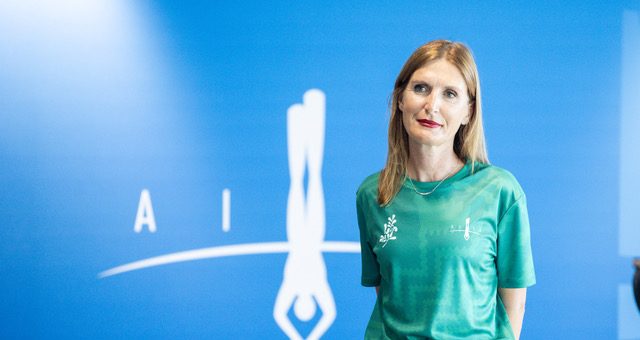
Tina Trstenjak, the Olympic, World, and European judo champion from Slovenia, met me in Baku, along the shores of the Caspian Sea, to share her story. She first stepped onto the tatami as a child, at just eight years old, in a dojo near her grandparent’s home. From there, under the guidance of her first sensei, Urška Žolnir, she began the journey that would take her to the very summit of world judo.
In our conversation, Tina spoke not only about her competitive career, but also about the role judo has played in shaping her character and personal life. Today, having retired from elite competition, she proudly teaches the next generation at the IJF Academy and also serves as IJF Refereeing Director, continuing to pass on the values of the sport she loves.
For me, conducting this interview by the Caspian Sea carried a deeply personal meaning. I grew up along these very shores, and Azerbaijan has always been closely connected to my homeland. That connection made this encounter even more special.
My sincere thanks to Tina Trstenjak for graciously accepting this interview.

IJF Academy
Let’s start from the beginning. What first drew you to judo, and who guided you in your earliest days on the tatami?
What first drew me to judo was actually quite unintentional. My grandparents lived near a judo club, and every week we would pass by on the way. Since I was very young, my parents encouraged me to participate in sports and always supported me. I tried many different sports, including both judo and swimming simultaneously for a while. However, when my schedule became busier, I had to choose to focus on just one sport. I choose judo because I had more fun there.
My first coach, or sensei, was Urška Žolnir, an Olympic champion competing in the same weight category as me. Having such a remarkable mentor from the start was truly inspiring.
On your road to Olympic gold in Rio 2016, was there a defining challenge or turning point?
One of the biggest turning points on my road to Olympic gold medal in Rio 2016 was watching Urška Žolnir win in Olympic Games in London 2012. Seeing her succeed, knowing we trained in the same club, under the same coach, and with the same dedication, gave me a powerful motivation. I told myself: why couldn’t I be in the same place in four years, in Rio? From that moment, my focus sharpened, I knew what it would take, and I was ready to commit everything to reach that goal.
The road wasn’t simple, there were defeats and plenty of hard days, but that vision of standing where Urška stood kept me going.
You faced Clarisse Agbegnenou in both the 2016 and 2021 Olympic finals. How would you compare those two experiences?
Both Olympic finals against Clarisse Agbegnenou were defining moments in my career, but very different experiences. In Rio 2016, everything came together perfectly. I was fully prepared, sharp, and focused, and the final felt easier than I had imagined. Winning there was the realization of a dream, the peak of years of hard work, not just mine but also people who stood by my side.
Tokyo 2021 was different. I stepped onto the tatami knowing it would be my last competition, last Olympic Games. It was emotional in a special way, because I wasn’t only fighting for the medal, but also closing a chapter of my life. The result wasn’t the same, but that final will always stay with me as the end of my journey at the very highest level of judo.

Olympic Games – Rio 2016
Of all the medals you have won, which ones carry the greatest meaning for you?
There are two victories that stand out as the most meaningful in my career. The first is the Olympic gold medal from Rio. With this victory, I became Olympic, World, and European champion all at the same time. This means a lot to me because very few judokas in the world have managed to achieve this remarkable feat. Becoming an Olympic champion is the ultimate dream for any top athlete, and only a rare few achieve it. I put an immense amount of work and effort into reaching that goal, not just me, but also my coach, sparring partners, and my entire club. So, to see all that hard work pay off was incredibly rewarding.
The second is my Olympic silver medal. Before Olympic Games in Tokyo, I knew it was going to be my last competition, so finishing my career with an Olympic medal was a very special moment. It brought a sense of relief and closure to my journey as a competitive judoka.
Now that you are a coach and educator, which values do you most want to instill in your students?
The most important values I want to pass on are respect, discipline, and perseverance. Respect builds character and strong relationships, discipline creates consistency and focus, and perseverance teaches students not to give up when challenges come.These values matter not only in judo but in everyday life.
The IJF Academy is growing rapidly. How do you see its role in the development of judo?
Judo is a dynamic sport constantly undergoing changes in knowledge, technology and training.The IJF Academy, created in 2013, is the educational/teaching arm of IJF. The IJF Academy goal is the education all around the world, on all continents, supporting the sport’s development in general and judo development in particular.
The role of the IJF Academy is to create positive impact in educational judo, competition judo, high performance judo, kata, self defence and judo for all.

IJF World Championship
You were once a student of the IJF Academy yourself. How did that experience shape you before becoming an expert within the same institution?
Before becoming an expert, I was also a student of the IJF Academy, and that experience gave me a deeper appreciation for the structure and knowledge it offers. Even though I had already lived through judo at the highest level as an athlete, the IJF Academy gave me new perspectives, how to teach and how to look beyond competition. What drew me to attend was the chance to keep learning, to challenge myself in a different way, and to gain tools that would allow me to contribute back to judo after my competitive career. Having been a student myself, stepping into the role of expert feels even more meaningful, as I know firsthand how valuable the Academy is for everyone who goes through it.
You are here in Baku with the IJF Academy. Can you tell me about this event?
Actually, it’s not a training camp but an IJF Academy practical session. Through the IJF Academy, students first complete an online course, and upon successful completion, they are allowed to join the practical session. I was here on the mat teaching alongside a team of experts, including Florin Daniel Lascau, a World Champion, IJF Head Refereeing Director and IJF Academy Sports Director; Mark Huizinga, an Olympic Champion; Dr. Slavisa Bradic, a Kata expert and IJF Academy Education Director; Dr. Tibor Kozsla, the IJF Academy Head of Institutions; and Envic Galea, Chair of the IJF Academy. I am happy to share knowledge, contribute to the education of coaches, and help foster growth and development in judo.
What continues to fuel your passion for judo, and how would you like your legacy in the sport to be remembered?
Tina Trstenjak: My passion for judo comes from everything the sport has given me throughout my life. As an athlete, it shaped my character, discipline, and resilience. Competing at the highest level taught me how far dedication and respect for the values of judo can take you. Now, being involved as an IJF Refereeing Director and IJF Academy Expert, my motivation comes from giving back to society, helping athletes, coaches, and referees to grow, and keeping the spirit of judo strong for the next generations. I hope to be remembered not only for what I achieved on the tatami, but for how I gave back to judo, by supporting others, sharing knowledge, and helping the sport grow worldwide.
Finally, what advice would you give to young judoka dreaming of the world stage?
My advice to young judoka who dream of reaching the world stage is to stay patient, disciplined, and open to learning. The path is never easy, and success doesn’t come overnight. You have to put in the daily work, stay consistent, and understand that defeats are just as important as victories, because they teach you resilience and help you grow. Most of all, don’t forget to enjoy the journey. If you keep your passion alive, stay humble, and never give up, the results will come in time.
 Last related articles