The President of the Hellenic Olympic Committee –HOC-, Isidoros Kouvelos, hosted a dinner in honor of the members of the women’s and men’s national water polo teams, following their remarkable results at the World Championships held in Singapore. The women’s team was crowned world champion, while the men’s team secured the bronze medal.
Kouvelos personally met with the athletes to thank them for the pride and joy they brought to the country. “You made us proud and brought us immense joy. You rightfully raised the Greek flag high, and we owe you a big thank you for the unforgettable moments we lived through your successes. The Hellenic Olympic Committee will always stand by the Federation and by you, on the road to the Los Angeles Olympic Games,” he said.
Marinakis, an example of sporting patronage
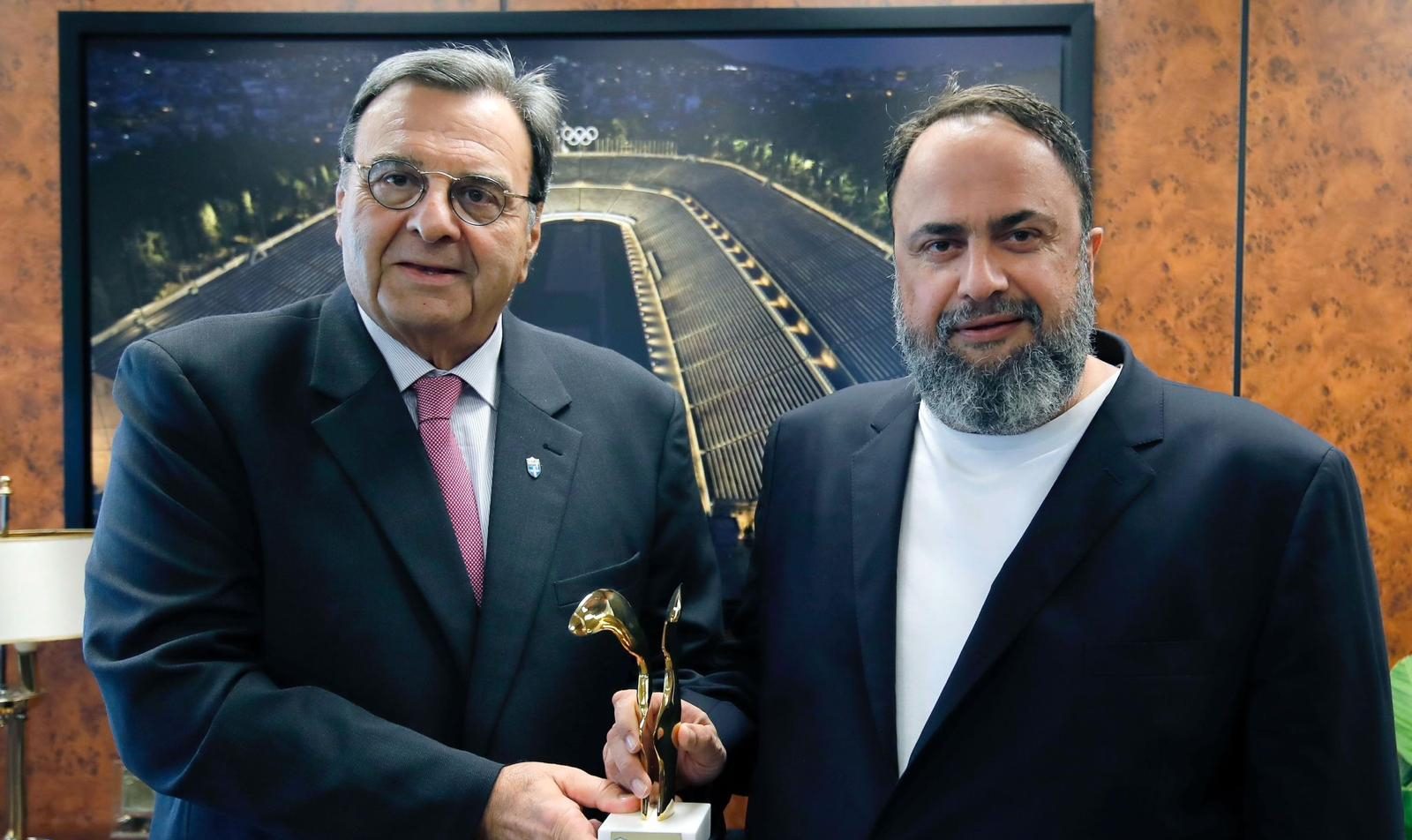
During the gathering, Kouvelos announced a financial bonus offered by businessman Evangelos Marinakis, owner of Olympiakos and Nottingham Forest football clubs. The contribution will amount to €200,000 in total, divided equally between the two teams.
“I encouraged Mr. Vangelis Marinakis to grant a reward, since the HOC cannot provide such bonuses and can only fund federations for Olympic preparation. He gladly agreed and will offer €100,000 to each team, because we believe the men’s bronze medal is worth as much as gold. The bonus will be distributed among the athletes, as well as coaches and staff, since everyone contributed to the two medals,” explained Kouvelos.
Other national Olympic committees supported by patrons
The figure of the private patron is not unique to Greece. In Italy, the Italian National Olympic Committee –CONI– has benefited from the influence of president Giovanni Malagò, who has helped connect the organization with strategic supporters. In the United States, individual donors linked to universities and major leagues have also played a significant role, with millions channeled through the United States Olympic & Paralympic Committee -USOPC-, which combines private funding with strong sponsorship programs.
Complementary funding models
Beyond private patrons, national Olympic committees rely on other sources of funding. The International Olympic Committee -IOC- redistributes part of the Olympic Games’ revenues among federations and national committees. In countries like France, state support through sports ministries is a decisive factor, while in smaller nations, foundations and private donors are essential to guarantee Olympic preparation programs.
In Greece, the combination of contributions from private figures such as Marinakis, the support of the HOC, and institutional aid offers a mixed model that allows its national teams to compete at the highest international level.
 Last related articles