For three days, the National Gymnastics Arena in Baku, Azerbaijan, witnessed a spectacular display of judo at the highest level. The 2025 edition of the Baku Grand Slam brought together top athletes from 36 nations, all competing for crucial world ranking points in a competition that has become a staple of the World Judo Tour.
The Azerbaijan Judo Federation, in partnership with the International Judo Federation, delivered a seamless event, reinforcing Azerbaijan’s reputation as an outstanding host of international sporting competitions. From the electrifying atmosphere in the arena to the meticulous organization behind the scenes, the Baku Grand Slam once again proved why it is one of the most anticipated stops on the tour.
Baku holds a special place in the world of judo. Over the years, Azerbaijan has built a strong judo culture, producing world and Olympic champions who continue to inspire the next generation. While this year’s tournament saw the absence of two of Azerbaijan’s biggest stars — Hidayat Heydarov and Zelym Kotsoiev, both reigning world and Olympic champions—the country still showcased remarkable depth in talent.
Azerbaijani judoka seized the opportunity to compete at home against some of the best athletes in the world. Their performances reaffirmed Azerbaijan’s status as a judo powerhouse, proving that their success is not dependent on a few individuals but rather on a well-structured system that consistently produces elite competitors.
JAPAN’S UNSTOPPABLE MARCH
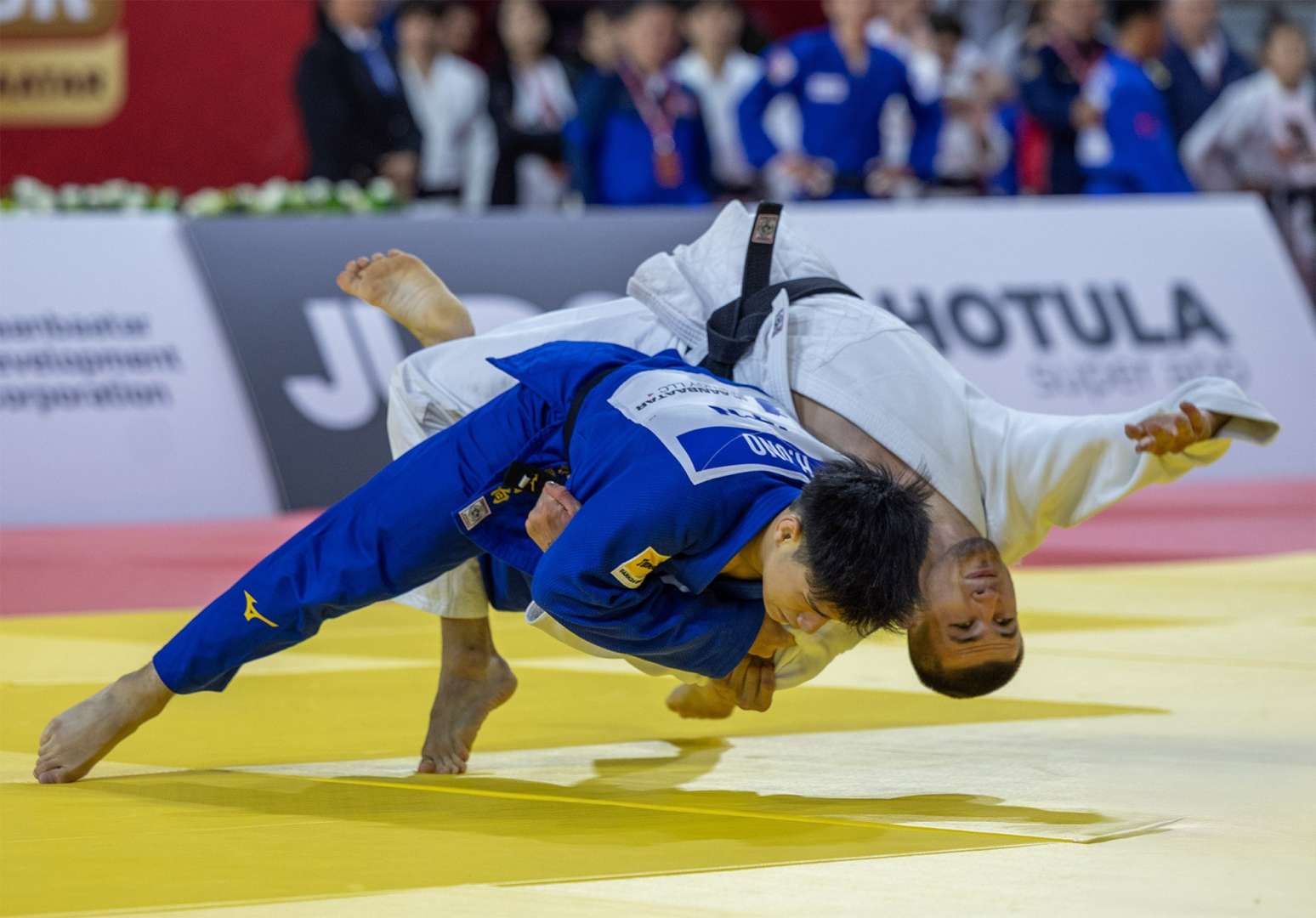
Unsurprisingly, Japan once again demonstrated its dominance. The birthplace of judo sent a high-caliber team to Baku, and their results justified their selection. Their judoka displayed technical brilliance, tactical intelligence, and the discipline that has long defined Japanese judo. With a strong medal count, Japan secured the top spot in the nations’ ranking, cementing its place as the global leader in the sport.

Azerbaijan’s ability to host world-class sporting events is well established, and the Baku Grand Slam was no exception. Every aspect of the tournament was executed with precision, from the competition schedule to athlete accommodations and media coverage. The event provided not only a platform for elite competition but also a celebration of judo’s values—respect, discipline, and unity.
A MOMENT OF TRUE JUDO SPIRIT
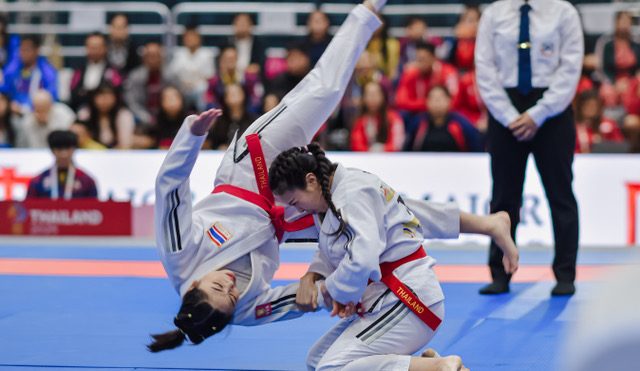
One of the most inspiring moments of the tournament came just before the final block on the last day of competition. A group of young judoka with cognitive disabilities took to the tatami for a special judo session, capturing the hearts of the crowd. Their enthusiasm, determination, and sheer joy embodied the true spirit of judo.
This initiative, part of a broader effort to promote inclusivity in the sport, highlighted the transformative power of judo as a tool for personal growth and social integration. The Azerbaijan Judo Federation has been at the forefront of such efforts, ensuring that judo remains accessible to all, regardless of physical or cognitive challenges. The thunderous applause that greeted the young participants was a powerful reminder that judo is more than just a competition—it is a way of life that fosters confidence, resilience, and belonging.
With the Baku Grand Slam now concluded, attention turns to the next major event on the World Judo Tour: the Tashkent Grand Slam in Uzbekistan, set to take place from February 28 to March 2. This event will bring another opportunity for athletes to test themselves against the best in the world as they continue their journey towards the Olympic Games.
Following Tashkent, the tour will move through Austria, Georgia, Tajikistan, and Kazakhstan, each hosting a crucial leg of the circuit. Then, all eyes will be on Budapest, Hungary, where the 2025 World Championships will be held—an event that promises to be a defining moment in the judo calendar.
 Last related articles